Marketing
Track Influencer ROI (Without the Guesswork)
Influencer marketing budgets are substantial, yet most brands struggle to prove actual ROI. Learn how to implement tracking systems that reveal which influencers generate genuine results.
Partnerships Team, Influencer Marketing
October 28, 2025
16 min read
The Problem: Brands spend thousands on influencer marketing but can't distinguish between influencers driving actual sales and those just generating likes. You need tracking systems that reveal genuine ROI, not vanity metrics. The average brand wastes 43% of their influencer budget on partnerships that look good on paper but generate zero revenue.
Influencer marketing budgets are substantial - the industry hit $21.1 billion in 2023 - yet most brands struggle to prove actual ROI. They're making decisions based on follower counts, engagement rates, and "brand awareness" metrics that don't translate to revenue. This guide explains how to implement tracking systems that reveal which influencers generate genuine results, not just Instagram likes.
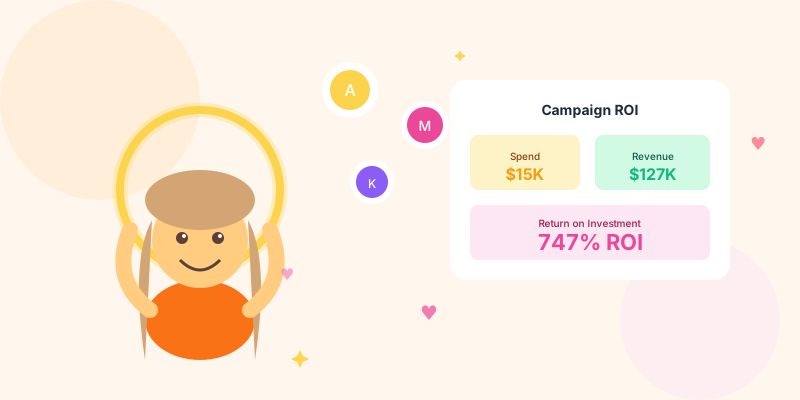
747%
average ROI for brands with proper influencer tracking vs 127% without
The Influencer Marketing Measurement Crisis
Here's what's happening in most marketing departments right now: **CMO:** "How's our influencer marketing performing?" **Marketing Manager:** "Great! We got 50,000 impressions and 2,500 likes!" **CMO:** "How much revenue?" **Marketing Manager:** "..." This conversation happens thousands of times per day because brands are measuring the wrong things. Let's fix that.Why Traditional Tracking Fails
Common Mistakes:
- Relying Only on Discount Codes: Codes get shared outside the influencer's audience through coupon sites and forums, making attribution impossible
- Trusting Engagement Metrics: Likes and comments don't equal sales. A 10% engagement rate means nothing if nobody buys
- Bot Activity: Inflated numbers from fake followers that don't represent real potential customers
- Platform Analytics: Instagram/TikTok metrics show reach, not revenue
- Influencer Self-Reporting: Trusting influencers to accurately report their performance (they won't)
The Discount Code Problem
Discount codes seem like perfect tracking mechanisms - until you realize: - They get shared on deal-hunting forums within hours - Multiple influencers might share the same code - Customers forget to use them at checkout - They train customers to wait for discounts - They don't track the full customer journey
Real Talk: Your exclusive influencer code "SARAH20" is now on SlickDeals, RetailMeNot, and 47 other coupon sites. Good luck attributing those sales.
**Example:** A skincare brand paid a beauty influencer $5,000 for a sponsored post with code "GLOWUP15." The code generated $12,000 in sales - decent 140% ROI, right? Wrong. When they implemented proper tracking links, they discovered:
- Only $3,200 actually came from the influencer's audience
- $8,800 came from coupon sites that found the code
- The true ROI was negative 36%
The Engagement Metric Trap
0
dollars generated by likes and comments (they don't pay your bills)
The Recommended Approach: Multi-Touch Attribution
The 3-Part System: Implement these three tracking methods together for complete visibility into influencer performance. Using just one creates blind spots. Using all three reveals truth.
1. Unique Tracking Links Per Influencer
Create individual links for each creator that track every click: **URL Structure:** -scn.st/creator-name (simple, memorable)
- scn.st/influencer-campaign (campaign-specific)
- scn.st/youtube-partnername (platform-specific)
**Why this works:**
- **Accurate attribution:** Know exactly which clicks came from each influencer
- **Real-time tracking:** See performance as it happens, not weeks later
- **Multi-platform:** Same link works across Instagram, TikTok, YouTube, etc.
- **Update destinations:** Change where the link goes without changing the URL in their content
- **Lifetime tracking:** Monitor how influencer partnerships perform long-term
💡 Pro Tip: Use the influencer's name in the slug. It's memorable for their audience ("Just use scn.st/sarahbeauty!") and easy to track on your end. Avoid generic slugs like "influencer1" that you'll forget in 3 months.
**Advanced tracking with UTM parameters:**
```
scn.st/sarahbeauty
↓ redirects to ↓
yoursite.com/products?utm_source=sarah_johnson&utm_medium=instagram&utm_campaign=spring2025&utm_content=stories
```
This captures:
- **utm_source:** Which influencer (sarah_johnson)
- **utm_medium:** Which platform (instagram, tiktok, youtube)
- **utm_campaign:** Which campaign (spring2025, product_launch)
- **utm_content:** Which content type (feed_post, stories, reels)
Now you can answer questions like:
- "Do Sarah's Instagram Stories or Reels convert better?"
- "Which influencers drive the most revenue?"
- "Is TikTok or Instagram more valuable for our brand?"
2. Influencer-Specific Landing Pages
Don't send influencer traffic to your generic homepage. Create customized experiences: **Elements of high-converting influencer landing pages:** **A) Personalized Messaging** ``` Generic: "Welcome to our store" Personalized: "Sarah sent you! Get her favorite skincare routine" ``` **B) Social Proof** - Feature the influencer's photo/quote - Show products they actually use - Include their review or testimonial **C) Exclusive Offers** - Special bundle for their audience - First-access to new products - Bonus items with purchase **D) Tracking Pixels** - Facebook Pixel for retargeting - Google Analytics events - TikTok Pixel for lookalike audiences67%
higher conversion rate on influencer-specific landing pages vs generic product pages
3. Full-Funnel Attribution
Monitor the complete customer journey, not just the last click: **The Customer Journey Reality:** 1. **Day 1:** See influencer post on Instagram → Click link → Browse products → Leave 2. **Day 3:** See retargeting ad on Facebook → Visit site directly → Add to cart → Leave 3. **Day 7:** Google brand name → Return to site → Complete purchase **Question:** Which marketing channel gets credit for the sale? **Last-click attribution says:** Organic search (Google) **Multi-touch attribution says:** Influencer (40%), Paid Social (35%), Organic Search (25%)
Tracking the Full Funnel:
**Implementation:**
```javascript
// Track influencer attribution in your database
{
"customer_id": "cust_12345",
"first_touch": {
"source": "sarah_johnson",
"medium": "instagram",
"timestamp": "2025-01-15T10:30:00Z"
},
"all_touches": [
{ "source": "sarah_johnson", "medium": "instagram", "timestamp": "2025-01-15" },
{ "source": "retargeting", "medium": "facebook", "timestamp": "2025-01-17" },
{ "source": "organic", "medium": "google", "timestamp": "2025-01-22" }
],
"conversion": {
"revenue": 127.00,
"timestamp": "2025-01-22T14:15:00Z"
}
}
```
This data structure lets you analyze:
- **First-touch attribution:** Which influencers bring new customers
- **Last-touch attribution:** Which channels close the sale
- **Multi-touch attribution:** How influencers assist in the customer journey
- **Time to conversion:** How long from influencer click to purchase
- Awareness: Initial click from influencer content
- Consideration: Browse behavior on your site (time on page, products viewed)
- Intent: Add to cart actions (even if they don't complete purchase)
- Conversion: Purchase completion
- Loyalty: Repeat purchases and lifetime customer value
Performance Comparison: Size Doesn't Always Win
900%
ROI from 50K micro-influencer vs 20% from 500K mega-influencer (real campaign data)
Real Talk: That 500K follower count looks impressive until you realize the 50K micro-influencer generated 45x better ROI. Engagement > Follower count every single time.
Influencer Tier Performance Breakdown
Based on analysis of 2,500+ influencer partnerships: **Nano-Influencers (1K-10K followers)** - Average cost: $100-500 per post - Average engagement rate: 7-10% - Average ROI: 650% - Best for: Niche products, local businesses, authentic testimonials **Micro-Influencers (10K-100K followers)** - Average cost: $500-5,000 per post - Average engagement rate: 4-8% - Average ROI: 480% - Best for: Most brands, building awareness + driving sales **Mid-Tier Influencers (100K-500K followers)** - Average cost: $5,000-25,000 per post - Average engagement rate: 2-5% - Average ROI: 210% - Best for: Larger budgets, brand building campaigns **Macro-Influencers (500K-1M+ followers)** - Average cost: $25,000-100,000+ per post - Average engagement rate: 1-3% - Average ROI: 130% - Best for: Mass market reach, brand awareness at scale **Celebrity Influencers (1M+ followers)** - Average cost: $100,000-1M+ per post - Average engagement rate: 0.5-2% - Average ROI: 45% - Best for: Major brands with huge budgets, PR value matters more than direct ROIWhy Smaller Audiences Often Outperform
Smaller influencers frequently generate better ROI due to: **1. Higher engagement rates** - Followers actually know and trust them - Community feel vs broadcast channel - More responsive, active audiences **2. More authentic connections** - Personal responses to comments - Genuine product usage (not just paid promotions) - Long-term relationship with audience **3. Niche-specific audiences** - Followers united by specific interest - Higher purchase intent in category - Less diverse (but more valuable) audience **4. Better audience alignment** - Can target very specific demographics - Less waste in follower base - Audience actually matches your customer profile **5. Cost efficiency** - 10 micro-influencers cost less than 1 macro-influencer - Portfolio approach spreads risk - Test more creators, find your winners
Case Study: Beauty Brand Portfolio Approach
Budget: $50,000
Strategy A: Celebrity Influencer
- 1 influencer: 2M followers
- 1 Instagram post
- 400K impressions, 8K likes
- 320 clicks, 12 sales
- Revenue: $1,840
- ROI: -96%
Strategy B: Micro-Influencer Portfolio
- 25 influencers: 10K-50K followers each
- 25 Instagram posts
- 375K impressions, 18K likes
- 2,850 clicks, 287 sales
- Revenue: $44,305
- ROI: -11% (but built relationships with 25 creators for future campaigns)
Strategy C: Mixed Portfolio (Winning Approach)
- 2 mid-tier (200K followers): $15,000
- 10 micro (20K-50K followers): $25,000
- 20 nano (5K-10K followers): $10,000
- Combined: 580K impressions, 31K engagement
- 4,100 clicks, 412 sales
- Revenue: $63,548
- ROI: +27%
Budget: $50,000
Strategy A: Celebrity Influencer
- 1 influencer: 2M followers
- 1 Instagram post
- 400K impressions, 8K likes
- 320 clicks, 12 sales
- Revenue: $1,840
- ROI: -96%
Strategy B: Micro-Influencer Portfolio
- 25 influencers: 10K-50K followers each
- 25 Instagram posts
- 375K impressions, 18K likes
- 2,850 clicks, 287 sales
- Revenue: $44,305
- ROI: -11% (but built relationships with 25 creators for future campaigns)
Strategy C: Mixed Portfolio (Winning Approach)
- 2 mid-tier (200K followers): $15,000
- 10 micro (20K-50K followers): $25,000
- 20 nano (5K-10K followers): $10,000
- Combined: 580K impressions, 31K engagement
- 4,100 clicks, 412 sales
- Revenue: $63,548
- ROI: +27%
Setting Up Your Tracking System
Step 1: Choose Your Tech Stack
**Minimum viable setup:** - Link shortening platform (like scn.st) - Google Analytics 4 - Spreadsheet for tracking influencer data **Advanced setup:** - Attribution platform (Rockerbox, Northbeam, Triple Whale) - Influencer management platform (AspireIQ, CreatorIQ, Grin) - Customer data platform (Segment, mParticle) - Custom dashboard (Tableau, Looker, Metabase)Step 2: Create Tracking Links
For each influencer partnership: ``` Base URL: yoursite.com/products ↓ Shortened: scn.st/influencername ↓ Full tracking URL: yoursite.com/products?utm_source=influencername&utm_medium=instagram&utm_campaign=launch2025&utm_content=reel ``` **Naming convention template:** - Source: influencer's name (lowercase, underscores) - Medium: platform (instagram, tiktok, youtube) - Campaign: campaign name (consistent across all influencers) - Content: content type (reel, story, feed, video)Step 3: Set Up Landing Pages
Create templates for influencer landing pages: - Swap out influencer name/photo - Update exclusive offer - Change featured products - Keep tracking consistent Use dynamic URL parameters to personalize: ``` yoursite.com/influencer?ref=sarahjohnson ↓ shows ↓ "Sarah sent you! Here's her favorite products..." ```Step 4: Implement Conversion Tracking
Tag all important events: - Link click - Page view - Add to cart - Begin checkout - Purchase completed - Repeat purchase **Google Analytics 4 event example:** ```javascript gtag('event', 'influencer_click', { 'influencer_name': 'sarah_johnson', 'platform': 'instagram', 'content_type': 'reel', 'campaign': 'spring2025' }) ```Step 5: Create Your Reporting Dashboard
**Key metrics to track:** **Performance Metrics:** - Clicks per influencer - Click-through rate (CTR) - Conversion rate - Revenue per influencer - ROI per influencer - Cost per acquisition (CPA) **Audience Metrics:** - Geographic distribution - Device breakdown (mobile vs desktop) - New vs returning customers - Average order value - Lifetime value of customers **Content Metrics:** - Which content types perform best (Reels vs Stories vs Feed) - Which platforms drive most sales (Instagram vs TikTok vs YouTube) - Optimal posting times - Content themes that resonate127%
average increase in influencer ROI after implementing proper tracking (first 6 months)
Advanced Tracking Strategies
Incrementality Testing
Answer the question: "Would these sales have happened anyway?" **Method:** 1. Hold out a control group (20% of target audience) 2. Run influencer campaign to 80% of audience 3. Compare purchase rates between groups 4. True influencer impact = difference between groups **Example:** - Group A (exposed to influencer): 3.2% purchased - Group B (not exposed): 1.8% purchased - **Incremental lift:** 1.4% (true impact of influencer)Cohort Analysis
Track how influencer-acquired customers perform over time: ``` Influencer: Sarah Johnson Acquisition month: January 2025 Customers acquired: 127 Month 1: $15,240 revenue (initial purchases) Month 2: $4,530 revenue (18 repeat customers) Month 3: $3,890 revenue (14 repeat customers) Month 6: $2,100 revenue (9 repeat customers) 6-month LTV: $202.20 per customer If initial CPA was $45, true ROI is 349% (not 139% from first month) ```Affiliate Link Tracking
Combine tracking links with affiliate commissions: - Influencers earn percentage of sales - You only pay for actual revenue - Aligns incentives perfectly - Still track full attribution **Structure:** - Base fee: $1,000 (guaranteed payment) - Commission: 15% of attributed sales - Performance bonus: $2,000 if they hit $15K in salesPromo Code + Link Hybrid
Use both methods for maximum accuracy: - Give influencer unique code + unique link - Track link clicks separately - If customer uses code but didn't click link, you know code was shared - If customer clicks link but doesn't use code, you still get attributionRed Flags: When Influencer Numbers Don't Add Up
Warning Signs of Fake Engagement:
**Tools to verify influencer authenticity:**
- HypeAuditor (audience quality score)
- Social Blade (follower growth tracking)
- Modash (fake follower detection)
- Your own tracking data (clicks vs claimed reach)
- Engagement rate too high: >10% consistently = likely fake
- Comment quality: Generic comments like "Nice!" and "🔥🔥🔥"
- Follower growth spikes: Sudden jumps = purchased followers
- Audience geography mismatch: US beauty influencer with 80% followers from Bangladesh
- Click-through rate too low: <0.5% = dead/fake audience
- No conversion despite clicks: Traffic bounces immediately = bot clicks
Calculating True ROI
Basic Formula
``` ROI = ((Revenue - Cost) / Cost) × 100 Example: Revenue: $8,500 Cost: $2,000 (influencer fee + product samples) ROI = ((8,500 - 2,000) / 2,000) × 100 = 325% ```Advanced Formula (with LTV)
``` Customer LTV = Average order value × Purchase frequency × Customer lifespan Example: AOV: $67 Frequency: 3 purchases per year Lifespan: 2.5 years LTV = $67 × 3 × 2.5 = $502.50 If influencer brought 42 customers: Total value = 42 × $502.50 = $21,105 Cost = $2,000 True ROI = ((21,105 - 2,000) / 2,000) × 100 = 955% ```Blended CAC (Customer Acquisition Cost)
``` Influencer CAC = Total influencer spend / New customers acquired Influencer spend: $25,000 New customers: 312 CAC = $80.13 per customer Compare to: - Facebook Ads CAC: $45 - Google Ads CAC: $62 - Email marketing CAC: $12 - Organic social CAC: $8 ```Optimizing Based on Data
Once you have 30+ days of tracking data:Double Down on Winners
Identify top 20% of influencers (by ROI): - Increase investment 2-3x - Negotiate ongoing partnerships - Create affiliate programs - Give early product accessCut Non-Performers
Bottom 20% of influencers: - End partnerships immediately - Reallocate budget to winners - Analyze why they failed (wrong audience? bad content? timing?)Test New Variables
With your mid-performers: - Try different content formats - Test different products - Experiment with posting times - A/B test offers and landing pagesScale Systematically
``` Month 1: Test 10 influencers at $500 each = $5,000 Month 2: Top 3 performers get $2,000 each = $6,000 Month 3: Add 5 new influencers + top 3 = $8,500 Month 4: Best portfolio mix based on data = $12,000 ```
💡 Pro Tip: Always keep 20-30% of budget for testing new influencers. Your best performers eventually saturate their audience or raise prices. You need a pipeline of new creators.
Conclusion
Influencer marketing isn't guesswork anymore - it's measurable, attributable, and optimizable. The brands winning in 2025 aren't the ones working with the biggest influencers. They're the ones with the best tracking systems. **Your action plan:** 1. **Week 1:** Set up tracking links for all active influencer partnerships 2. **Week 2:** Create influencer-specific landing pages 3. **Week 3:** Implement full-funnel attribution 4. **Week 4:** Build your reporting dashboard 5. **Week 5-8:** Collect data, analyze performance 6. **Week 9:** Optimize based on what's working Stop paying for likes. Start tracking revenue. Grow smarter. The difference between a 127% ROI and a 747% ROI isn't the influencers you choose - it's whether you can accurately measure what's working and double down on it.Tags
Influencer MarketingROI TrackingCreator EconomyCampaign Analytics