Conversion Rate Optimization: How Your Links Affect Sales
Your links are conversion leaks you haven't noticed. From URL structure to destination pages, every element affects whether visitors become customers.
Most conversion rate optimization focuses on landing pages and checkout flows. That's important. But the link itself—how it looks, where it leads, what it loads—dramatically impacts whether someone converts.
How Links Impact Conversions
- Trust Signals: Branded domains vs generic shorteners (39% CTR difference)
- Load Speed: Every 100ms delay costs 1% conversion
- Mobile Experience: 53% abandon if page takes >3 seconds
- UTM Parameters: Cluttered URLs reduce trust
- Destination Match: Link promise vs landing page reality
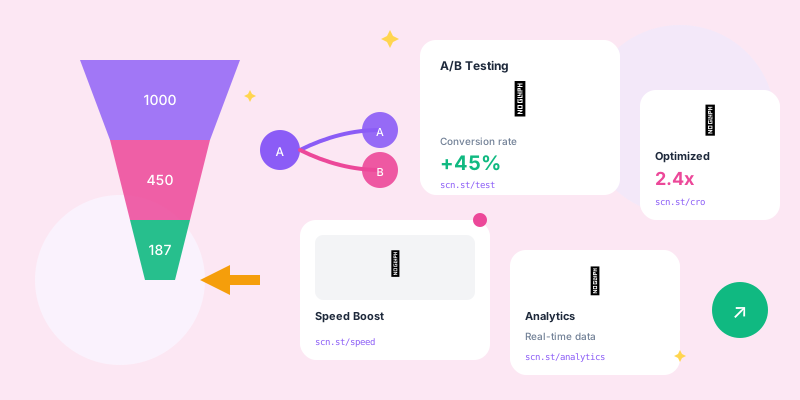
The Conversion Funnel from Click to Purchase
- Click Decision: Does the link look trustworthy?
- Redirect Time: How fast does it load?
- Landing Page: Does it match expectations?
- Page Experience: Easy to navigate and convert?
- Checkout: Smooth completion?
Each step has drop-off. Optimize all five, not just landing pages.
Link Trust and Click-Through Rates
Branded vs Generic Links
- Generic: bit.ly/x7k3p9 - Anonymous, potentially suspicious
- Branded: nike.run/summer-sale - Recognizable, trustworthy
- Full URL: nike.com/promo/summer-sale-2024 - Transparent but long
Test results consistently show:
- Branded short links: 39% higher CTR than generic
- HTTPS links: 21% more trusted than HTTP
- Readable slugs: 28% better than random characters
yourbrand.co/nike-collab converts better than yourbrand.co/a8x2p because users know where they're going.
Page Speed and Load Time Impact
The Speed-Conversion Relationship
- 0-1 second: Optimal conversion rates
- 1-3 seconds: Conversions drop 7%
- 3-5 seconds: Conversions drop 38%
- 5+ seconds: Conversions drop 90%+ (most users abandon)
Link Redirect Optimization
Minimize redirect time:
- Server-side redirects: 307 redirects preserve method (faster)
- Edge network: Use CDN for global speed
- DNS optimization: Fast DNS lookups (under 20ms)
- Keep-alive connections: Reduce connection overhead
- HTTP/2: Multiplexed connections
- Bad: Short link → tracking page → landing page → product page (3 hops)
- Good: Short link → product page (direct)
- Every redirect adds 200-500ms delay
Mobile Link Optimization
Mobile-Specific Conversion Factors
80% of social traffic is mobile—optimize for it:
- One-tap actions: Minimize typing and navigation
- Large touch targets: 44x44 pixels minimum
- Readable text: 16px font size (no zooming required)
- Instant load: <2 second page load on 4G
- No pop-ups: Google penalizes mobile interstitials
Deep Linking for Mobile Apps
If you have an app, implement app deep links:
- Universal Links (iOS): Seamlessly open app if installed
- App Links (Android): Android equivalent
- Fallback to Web: If app not installed, load mobile web
- Deferred Deep Linking: Track attribution through install
UTM Parameters and URL Aesthetics
The UTM Paradox
UTM parameters are essential for tracking but hurt aesthetics:
site.com/product?utm_source=facebook&utm_medium=social&utm_campaign=summer_sale&utm_content=variant_a&fbclid=IwAR0x7...
Problems with long tracked URLs:
- Look spammy and untrustworthy
- Break when shared (parameters get truncated)
- Expose campaign strategy to competitors
- Reduce social share likelihood
The Short Link Solution
Short links solve UTM problems:
- Clean appearance:
brand.co/summer(no visible UTMs) - Embedded tracking: Parameters added server-side
- Share-friendly: Easy to copy and share
- Updateable: Change destination without changing link
Message Match: Link Promise vs Landing Reality
Common Message Match Failures
- Ad says "50% off" → Landing page doesn't mention discount
- Link says "free-shipping" → Landing page shows shipping costs
- Email promises new product → Link goes to homepage
- Social post shows blue shoes → Landing page shows red shoes
Creating Message Match
- Use descriptive slugs:
brand.co/50-offsets expectations - Dynamic landing pages: Customize based on traffic source
- Headline echo: Landing page headline repeats ad promise
- Visual consistency: Same images and colors from ad to page
Strategic Link Placement
CTA Positioning Best Practices
- Above the fold: Primary CTA visible without scrolling
- After value prop: Explain benefit, then offer link
- End of content: Once reader is convinced
- Multiple placements: Top, middle, bottom (test what works)
Link Text Optimization
What you say matters:
- Action-oriented: "Get your discount" > "Click here"
- Value-focused: "Start free trial" > "Sign up"
- Specific: "Download PDF guide" > "Learn more"
- Urgent: "Claim offer today" > "Check it out"
Landing Page Pre-Loading
Predictive Pre-Loading
Start loading landing pages before the click:
- Link Hover: Begin DNS lookup on mouseover
- Prefetch: Download critical resources in background
- Service Workers: Cache destination pages
- Instant.page: Library that pre-loads on hover/touch
<link rel="prefetch"> for your most common landing pages. When users click, page appears instantly because it's already cached.
A/B Testing Links
What to Test
- Domain type: Branded vs generic shortener
- Slug format: Descriptive vs random vs numeric
- Destination page: Homepage vs product page vs landing page
- Link text: Different CTAs and value propositions
- Link placement: Top vs middle vs bottom of content
Testing Methodology
- Create variants: Two different links to same destination
- Split traffic: 50/50 distribution
- Track conversions: Not just clicks—actual sales/signups
- Statistical significance: Run until 95% confidence
- Implement winner: Roll out best performer
Conversion Tracking Implementation
- Link clicks: Track who clicked what and when
- Landing page views: Did they actually land or bounce during redirect?
- Time on page: Engagement indicator
- Add to cart: Micro-conversion
- Purchase/signup: Final macro-conversion
- Revenue: Dollar value per link click
Pixel and Analytics Integration
- Facebook Pixel: Track conversions back to social ads
- Google Analytics: Full funnel analysis
- LinkedIn Insight Tag: B2B conversion tracking
- Custom pixels: Your own analytics platform
Email Link Optimization
Email-Specific Best Practices
Email links need special treatment:
- Plain text appearance: Some clients strip HTML
- Short and clean: Long URLs break across lines
- Branded domain: Builds trust in inbox
- No redirects: Email clients sometimes block redirects
- Mobile-first: 60% of email opens are mobile
- One primary CTA (bold, above fold)
- Repeat CTA at bottom (for scrollers)
- Text link version (for plain text clients)
- Unique tracking per email variant
Social Media Link Optimization
Platform-Specific Strategies
Instagram:
- Bio link must be mobile-perfect
- Story links need instant load
- Visual match between post and landing page
Twitter/X:
- Link preview optimization (og:image, og:title)
- Short domains to save character count
- Thread-friendly sequential links
LinkedIn:
- Professional appearance (branded domains essential)
- B2B landing pages (not consumer-focused)
- Longer consideration cycle (nurture focus)
Conversion Rate Benchmarks
- Email: 3-5% (warm audience)
- Social Organic: 1-2% (awareness stage)
- Social Paid: 2-4% (targeted ads)
- Search Branded: 10-15% (high intent)
- Search Non-Branded: 2-4% (research mode)
- Direct: 8-12% (returning visitors)
Link CRO Checklist
- ✅ Use branded short domains (not generic shorteners)
- ✅ Implement descriptive slugs (not random characters)
- ✅ Optimize redirect speed (<200ms)
- ✅ Ensure mobile-first experience
- ✅ Match link promise to landing page
- ✅ Clean URLs (hide ugly UTM parameters)
- ✅ HTTPS everywhere (security badge visible)
- ✅ Fast landing page load (<2 seconds)
- ✅ Track full funnel (click → conversion)
- ✅ A/B test systematically
- ✅ Implement deep linking (if you have app)
- ✅ Optimize link placement and text
Conclusion
Your links aren't just connectors—they're conversion tools. Every element from domain choice to redirect speed to destination match affects whether clicks become customers.
Stop treating links as afterthoughts. Optimize them like you optimize landing pages. Test them like you test ads. Track them like you track revenue. The brands winning on conversion rate aren't just lucky—they're optimizing the entire click-to-conversion experience, including the link itself.