Your Podcast Links Are Invisible (Here's How to Fix That)
Podcast listeners can't click audio. Yet most podcasters treat link sharing like an afterthought. Learn proven strategies to turn audio mentions into trackable, measurable conversions.
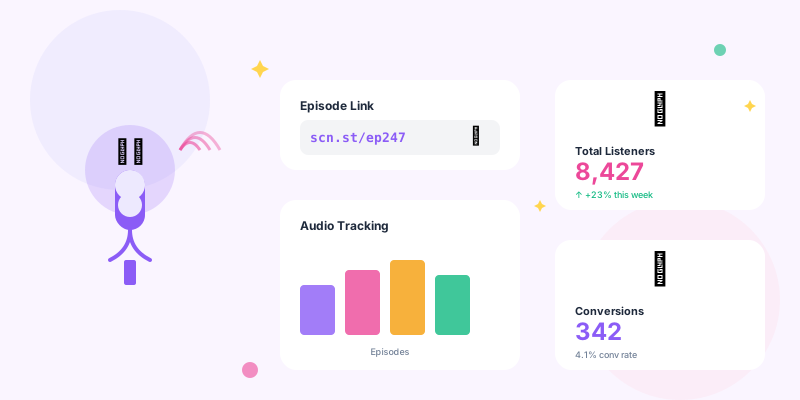
Podcast advertising is projected to surpass $4 billion in 2026. Brands are pouring money into podcast sponsorships. Creators are building seven-figure businesses from audio content. But here's the uncomfortable truth: most podcasters have absolutely no idea which episodes, which calls-to-action, or which link mentions actually drive conversions.
You're creating content in an unclickable medium and expecting results. The disconnect is real. But fixable.
Why Podcast Link Tracking Is Different (And Harder)
Every other marketing channel gives you immediate, clickable feedback. Email has click-through rates. Social media has link clicks. Ads have tracked conversions. Podcasting? You talk into a microphone and hope for the best.
- No native links: Audio is not clickable (obviously)
- Delayed action: Listeners rarely act immediately - they're commuting, working out, doing dishes
- Memory failure: Long URLs are impossible to remember
- Discovery lag: Episodes continue getting downloads months/years after release
- Platform fragmentation: Apple Podcasts, Spotify, YouTube, RSS feeds - all different analytics
- Multi-touch journey: Listener hears 3 episodes before converting - which one gets credit?
You mention "yourcompany.com/special-offer" in your podcast. A week later, someone types that URL from memory. Did they come from your podcast? Or Google? Or Instagram? You have no idea.
The Smart Podcast Link Strategy
1. Episode-Specific Short Links
Stop doing this:- "Visit our website at yourcompany.com"
- "Head to yourcompany.com/products"
- Using the same URL in every episode
- Create a unique short link for EVERY episode
- Make it memorable and sayable
- Include it in show notes AND verbal mentions
Episode 47 about email marketing:
yourshortdomain.com/ep47
yourshortdomain.com/email-tips

Episode 48 about conversion optimization:
yourshortdomain.com/ep48
yourshortdomain.com/conversion-tips
2. The Verbal Link Technique
How humans actually remember URLs: Bad (impossible to remember):"Visit h-t-t-p-s colon slash slash w-w-w dot yourcompany dot com slash products slash new dash collection dash 2025"
Good (actually memorable):"Go to yourshortdomain.com slash podcast. That's yourshortdomain dot com slash podcast. I'll also put the link in the show notes."
Best (multiple reinforcement):"Head to yourshortdomain.com/podcast for the free template we mentioned. Again, that's yourshortdomain.com/podcast. You can also find it in the show notes if you're driving right now."
- Say it slowly: Enunciate clearly, speak slower than normal
- Repeat it: Mention the URL at least 2-3 times per episode
- Spell if needed: If your domain is tricky, spell it out
- Reference show notes: Always mention "it's in the show notes" for drivers
- Use phonetic clarity: Avoid confusing letters (O vs 0, I vs l)
- Keep it short: Maximum 20 characters for verbal mentions
3. Show Notes Optimization
Your show notes are SEO gold and conversion opportunities. Most podcasters waste them. Weak show notes:
Episode 47: Email Marketing Tips

In this episode, we discuss email marketing strategies.

Sponsored by [Brand]
Episode 47: How to 10X Your Email Open Rates (Without Spam Tricks)

🎯 In This Episode:
• Why 73% of email campaigns fail before they start
• The "3-second rule" for subject lines that actually get opened
• How to segment your list for 340% better engagement
• Real examples from $10M+ email campaigns

🔗 Resources Mentioned:
• Free Email Template Library → yourshortdomain.com/ep47-templates
• Subject Line Analyzer Tool → yourshortdomain.com/ep47-tool
• Email Segmentation Guide → yourshortdomain.com/ep47-guide

💰 Special Offer:
Get 30% off our Email Mastery Course with code PODCAST30
→ yourshortdomain.com/ep47-offer

⏰ Timestamps:
00:00 - Introduction
03:15 - The email open rate crisis
08:45 - Subject line psychology
15:20 - Segmentation strategies
24:10 - Real campaign examples
32:00 - Resources and offer

🎙️ Sponsor: [Brand Name]
[Brand] helps [specific benefit]. Listeners get [specific offer] at yourshortdomain.com/sponsor
4. Promo Code Strategy
Combine short links with promo codes for double tracking:
Verbal mention:
"Use code PODCAST30 for 30% off at yourshortdomain.com/offer"

What you can track:
• Link clicks from yourshortdomain.com/offer (URL tracking)
• Promo code usage "PODCAST30" (checkout tracking)
• Compare code redemptions to link clicks (conversion rate)
- Some listeners will click the link and use the code (perfect tracking)
- Some will click the link but forget the code (you still know they came from podcast)
- Some will remember the code but type your main domain (code tracking captures them)
- Cross-reference both data sources for complete picture
- PODCAST30: General podcast discount (if you mention in multiple episodes)
- EP47: Episode-specific tracking
- AUDIODEAL: Audio-specific offer across all audio content
- CONVERT30: Topic-specific (for conversion optimization episode)
- Avoid: Complex codes (PODCAST2025WINTER30OFF) - nobody remembers these
Advanced Podcast Attribution Strategies
1. Unique Landing Pages Per Episode
Don't send everyone to your homepage. Create episode-specific landing pages. Example flow:
Podcast mention → yourshortdomain.com/ep47 → Custom landing page that:
• References the specific episode ("Welcome, podcast listener!")
• Highlights the exact resource mentioned in the episode
• Pre-fills promo code in checkout
• Shows social proof from other podcast listeners
• Includes audio player to continue the conversation
2. Multi-Touch Attribution
The reality: Most podcast conversions aren't immediate. Listener journey looks like:
Day 1: Hears Episode 45, thinks "interesting"
Day 7: Hears Episode 47, thinks "okay, this is useful"
Day 14: Searches your brand on Google
Day 21: Sees your Instagram ad
Day 28: Finally converts

Which touchpoint gets credit?
yourshortdomain.com/ep47 → Redirects to:

yourdomain.com/offer?
utm_source=podcast
&utm_medium=audio
&utm_campaign=main_podcast
&utm_content=episode_47
&utm_term=email_marketing

Now your analytics show:
• This visitor came from your podcast (utm_source)
• From audio content specifically (utm_medium)
• From your main podcast show (utm_campaign)
• From episode 47 (utm_content)
• Episode topic was email marketing (utm_term)
3. Post-Roll vs. Mid-Roll Link Performance
Test where you mention your link in the episode: Pre-roll (first 60 seconds):- Pros: High retention, everyone hears it
- Cons: Listener isn't warmed up yet, may not trust you yet
- Best for: Brand awareness, general offers
- Pros: Contextual (mention right after discussing relevant topic)
- Cons: Some listeners skip ahead
- Best for: Product mentions directly related to content
- Pros: Listener is fully engaged, trusts you, ready to act
- Cons: 30-40% of listeners don't finish episodes
- Best for: Deep offers, courses, high-ticket items
Platform-Specific Strategies
Apple Podcasts
Advantages:- Show notes support links
- Episode descriptions appear in search
- Listener reviews provide social proof
- Put your primary link in the FIRST line of show notes (visible without "more")
- Use Apple Podcasts Connect analytics to see which episodes get most plays
- Cross-reference play counts with link click data
Spotify
Advantages:- Video podcasts (if you record video)
- Clickable show notes
- Spotify for Podcasters analytics
- If doing video: show the URL on screen while saying it
- Use Spotify's demographic data to understand who clicks your links
- Test different link placements in show notes (Spotify's format is different)
YouTube Podcasts
Advantages:- Video + description links
- Pinned comments
- Chapter markers with timestamps
- End screens and cards
- Show URL on screen as B-roll while mentioning it
- Pin a comment with all links (many viewers check comments)
- Use YouTube chapters for "Resources mentioned: [timestamp]"
- Add clickable cards at relevant moments
- Description (first 2 lines): Primary CTA link
- Description (below fold): Resources mentioned with timestamps
- Pinned comment: "🔗 All links mentioned in this episode"
- End screen: Link to your site
- Cards: Trigger cards when verbally mentioning links
Tracking and Measuring Success
Key Metrics for Podcast Links
Track these for each episode:1. Click-through rate (CTR):
- Formula: (Link clicks ÷ Episode downloads) × 100
- Benchmark: 2-5% is typical, 8%+ is excellent
2. Conversion rate:
- Formula: (Conversions ÷ Link clicks) × 100
- Compare to your website average
3. Time to conversion:
- How many days between click and purchase?
- Podcast conversions typically take 2-4 weeks longer than other channels
4. Episode ROI:
- Revenue from episode-specific links ÷ Production cost
- Tracks which topics drive most revenue
5. Link mention timing:
- Compare CTR when mentioning link at 5 minutes vs. 15 minutes vs. 30 minutes
- Find your optimal mention timing
Episode Performance View:
- Episode 47: 2,400 downloads → 156 clicks (6.5% CTR) → 12 conversions ($4,788 revenue)
- Episode 46: 2,100 downloads → 89 clicks (4.2% CTR) → 7 conversions ($2,793 revenue)
- Episode 45: 2,600 downloads → 203 clicks (7.8% CTR) → 18 conversions ($7,182 revenue)
Insight: Episode 45 had the highest engagement despite mid-range downloads. The topic (email marketing) resonated more than Episode 47 (general productivity). Double down on email content.
Attribution Window Settings
Set realistic expectations:
Standard web attribution: 30 days
Podcast attribution: 60-90 days recommended

Why? Listeners:
• Binge your back catalog over weeks
• Take time to build trust
• Research before buying
• Wait for payday/budget
- Track link clicks for 90 days
- Attribute conversions to podcast if they clicked a podcast link anytime in the past 90 days
- Compare 30-day vs 90-day podcast conversion rates
Common Podcast Link Mistakes
Mistake #1: Using Your Main Domain
Problem:"Visit ourcompany.com to learn more"
Why it fails:- Can't distinguish podcast traffic from Google, social, direct
- Generic CTAs get tuned out
- No episode-specific tracking
Use episode-specific short links: yourshortdomain.com/ep47
Mistake #2: Mentioning the Link Once
Problem:You mention your URL once at the 38-minute mark of a 40-minute episode. 60% of listeners didn't make it that far.
Why it fails:- Drop-off rates (30-40% of listeners don't finish)
- Multitasking (listener was distracted during your 1 mention)
- Memory (by the time they can act, they forgot)
Mention your link 3 times:
- Once early: "We'll share a resource at the end"
- Once mid-episode: "Remember, you can grab this at [link]"
- Once at the end: "As promised, here's the link: [URL]"
Mistake #3: Complicated URLs
Problem:"Visit https://www.ourcompany.com/products/category/new-collection-2025-special-offer"
Why it fails:Nobody can remember this. Spell it out loud—it takes 45 seconds.
Solution:yourshortdomain.com/new
Mistake #4: No Show Notes Links
Problem:Verbal mention only, nothing in show notes
Why it fails:- Listeners in cars (can't type while driving)
- Discovery lag (someone finds your episode 6 months later)
- SEO (show notes with links rank in search)
ALWAYS include links in show notes, even if you mention them verbally
Mistake #5: Not Testing CTAs
Problem:Using the same exact CTA in every episode
Why it fails:Different topics = different audience intent. The CTA that works for a beginner episode bombs on an advanced tactics episode.
Solution:Test variations:
- "Grab the free template"
- "Get 30% off with code PODCAST30"
- "Join 50,000 other listeners who..."
- "See real examples at..."
Track which CTA language drives most clicks
The Podcast Link Optimization Workflow
Pre-Recording
1. Create episode-specific short link(s) 2. Set up UTM tracking 3. Create landing page (or update existing one with episode reference) 4. Test all links work 5. Set up promo code if offering discount6. Draft show notes with all links
During Recording
1. Mention primary link 2-3 times throughout episode 2. Speak slowly and clearly when saying URL 3. Reference "link in show notes" for drivers 4. If video: show URL on screen when mentioning5. Give context: "Head to [link] to grab the free template we just discussed"
Post-Recording
1. Add all links to show notes (organized by category) 2. Include timestamps for when resources are mentioned 3. Create unique links for different platforms (YouTube, Spotify, Apple) 4. Add to your link tracking dashboard5. Set reminders to check performance in 7 days, 30 days, 90 days
Analysis (Weekly/Monthly)
1. Which episodes drove the most clicks? 2. What topics resonate best (highest CTR)? 3. Which CTA language works best? 4. What timing works (early mention vs. late mention)?5. Platform differences (YouTube vs. Spotify vs. Apple)?
Conclusion
Your podcast is not untrackable. You're just not tracking it correctly.The difference between "podcast ROI is hard to measure" and "podcast drives 23% of our revenue" is proper link tracking. Episode-specific short links. Clear CTAs mentioned multiple times. Detailed show notes. Promo codes. UTM parameters. Landing pages.
Your action plan: This week:- Create episode-specific short links for your next 5 episodes
- Draft show notes template with link sections
- Set up promo code for podcast listeners
- Implement UTM tracking on all podcast links
- A/B test CTA timing (early vs. mid vs. late episode)
- Build dashboard to track episode-level performance
- Analyze which topics drive best conversion rates
- Create landing pages for top-performing episode topics
- Calculate true podcast ROI with proper attribution
Stop guessing. Start tracking. Your podcast is either driving revenue or it's an expensive hobby. The only way to know is proper link tracking.
Now go create yourshortdomain.com/podcast and put it in your show notes.