Link Performance Benchmarks: How Your Industry Stacks Up
Is your 2% click-through rate good or terrible? Industry benchmarks reveal what "normal" looks like for link performance, helping you set realistic goals.
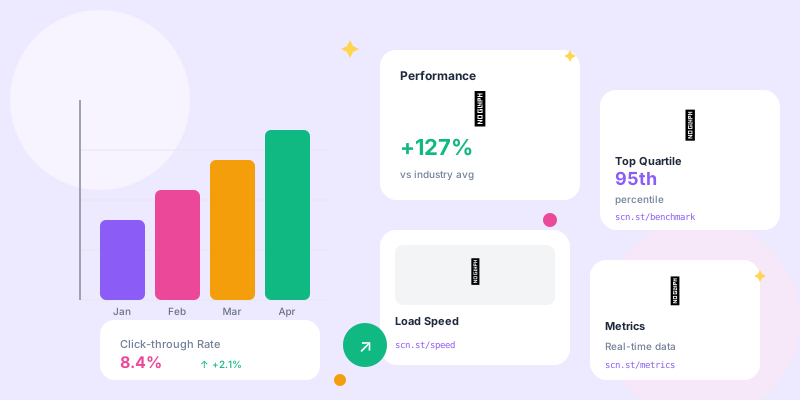
You can't optimize what you can't measure. But even worse? Measuring without context. Is your link performance good, average, or terrible? Here are the benchmarks you need.
Why Benchmarks Matter
- Performance Context: Whether your metrics are above or below average
- Realistic Goals: What's actually achievable in your industry
- Competitive Standing: How you compare to similar businesses
- Opportunity Areas: Where you have the most room for improvement
- Budget Justification: Data to support resource allocation
Factors That Affect Benchmarks
- Industry: B2B vs B2C, tech vs retail, etc.
- Platform: Email vs social vs paid ads
- Audience Size: Small engaged audiences perform better
- Link Type: Branded vs generic, descriptive vs random
- Device: Mobile vs desktop behavior differs
Click-Through Rate (CTR) Benchmarks
By Industry
- E-commerce: 2.8-3.5% (product-driven, impulse purchases)
- B2B SaaS: 2.1-2.9% (longer consideration cycles)
- Finance: 1.8-2.4% (trust-dependent, conservative audience)
- Healthcare: 1.9-2.6% (compliance-heavy, professional)
- Media/Publishing: 4.2-5.8% (content-driven, high engagement)
- Non-Profit: 3.4-4.1% (mission-driven, engaged donors)
- Real Estate: 2.3-3.2% (high-value, research-intensive)
- Travel: 3.1-4.3% (visual, aspirational content)
By Platform
- Email Marketing: 4.5-5.3% (warm, opted-in audience)
- Social Organic: 1.2-1.9% (low reach, engaged followers)
- Social Paid: 0.9-1.5% (broader reach, cold audience)
- Search Ads (Google): 3.2-4.1% (high intent searches)
- Display Ads: 0.4-0.7% (awareness, not conversion)
- SMS Marketing: 8.5-11.2% (most direct, highest urgency)
Social Media Platform Benchmarks
- Bio Link CTR: 0.8-1.2% (per profile view)
- Story Swipe-Up CTR: 1.5-2.3% (engaged, ephemeral content)
- Post with "Link in Bio" CTR: 0.3-0.6% (requires extra step)
- Engagement Rate: 1.2-1.8% (likes, comments, shares)
TikTok
- Bio Link CTR: 0.9-1.4% (younger audience, high engagement)
- Video Link CTR: 1.8-2.7% (in-video link prompts)
- Engagement Rate: 5.3-7.2% (highest of all platforms)
- Organic Post CTR: 1.8-2.4% (B2B professional audience)
- Sponsored Content CTR: 0.4-0.6% (paid promotion)
- Direct Message CTR: 12-18% (one-to-one outreach)
Twitter/X
- Organic Tweet CTR: 1.6-2.1% (fast-moving feed)
- Promoted Tweet CTR: 0.9-1.4% (paid ads)
- Thread CTR: 2.8-3.9% (engaged readers)
- Organic Post CTR: 0.8-1.3% (declining organic reach)
- Facebook Ads CTR: 0.9-1.2% (targeting-dependent)
- Link Post CTR: 1.1-1.7% (better than photo posts)
Email Marketing Benchmarks
By Email Type
- Newsletter: 3.8-4.5% (regular content updates)
- Promotional: 2.1-2.9% (sales and offers)
- Transactional: 8.2-12.4% (order confirmations, receipts)
- Welcome Series: 6.5-9.1% (new subscribers, high interest)
- Re-engagement: 1.2-1.8% (dormant subscribers)
- Cart Abandonment: 4.8-6.3% (high intent, reminder)
By List Size
- Under 1,000 subscribers: 6.2-8.1% CTR (highly engaged)
- 1,000-5,000: 4.5-5.8% CTR
- 5,000-10,000: 3.8-4.9% CTR
- 10,000-50,000: 3.2-4.1% CTR
- 50,000+: 2.4-3.3% CTR (scale reduces engagement)
Conversion Rate Benchmarks
E-commerce Conversion Rates by Source
- Email Traffic: 3.2-4.8% (warm audience)
- Social Traffic: 1.8-2.6% (awareness to consideration)
- Search (Branded): 8.4-12.1% (high purchase intent)
- Search (Non-Branded): 2.4-3.7% (research phase)
- Direct Traffic: 6.8-9.2% (returning customers)
- Referral Traffic: 2.9-4.1% (varies by referrer quality)
B2B Lead Generation Conversion Rates
- Landing Page (Email): 8-12% (targeted campaigns)
- Landing Page (Social): 2-5% (cold audience)
- Landing Page (Search): 5-10% (problem-aware)
- Demo Request: 3-7% (high-intent action)
- Content Download: 15-25% (low-commitment)
Branded vs Generic Short Link Performance
- Branded Short Links (yourbrand.co): 3.9% avg CTR
- Generic Shorteners (bit.ly): 2.8% avg CTR
- Full URLs: 2.4% avg CTR (too long, intimidating)
- Performance Difference: 39% higher CTR for branded links
Trust and Recognition Impact
- Users are 68% more likely to click recognizable brand domains
- Branded links reduce bounce rate by 18%
- Conversion rate 21% higher from branded links
- Share rate 34% higher (people trust sharing branded links)
Device-Based Performance
Mobile vs Desktop
- Mobile CTR: 3.8% (higher engagement, impulse clicks)
- Desktop CTR: 2.6% (more deliberate, research-focused)
- Tablet CTR: 3.1% (hybrid behavior)
- Mobile Conversion: 1.8% (lower than desktop due to friction)
- Desktop Conversion: 3.4% (easier checkout, larger screens)
The Mobile Paradox
Mobile gets more clicks but fewer conversions:
- Mobile Traffic Share: 70-80% of social traffic
- Mobile CTR: 46% higher than desktop
- Mobile Conversion Rate: 47% lower than desktop
- The Gap: Mobile experience still not optimized for conversion
Geographic Performance Variations
CTR by Region
- North America: 3.4% (mature market, ad-saturated)
- Europe: 2.9% (privacy-conscious, GDPR impact)
- Asia-Pacific: 4.1% (mobile-first, high engagement)
- Latin America: 3.8% (growing digital adoption)
- Middle East: 3.2% (emerging market)
- Africa: 4.4% (mobile-dominant, growing fast)
Time-Based Performance Patterns
Best Times to Share Links
- Email: Tuesday-Thursday, 10 AM-12 PM (B2B), 8 PM-10 PM (B2C)
- LinkedIn: Tuesday-Thursday, 9 AM-12 PM (working hours)
- Instagram: Monday-Friday, 11 AM-1 PM, 7 PM-9 PM (commute + evening)
- TikTok: Tuesday-Thursday, 9 PM-12 AM (night scrolling)
- Twitter: Wednesday-Friday, 9 AM-3 PM (news cycle)
- Facebook: Wednesday-Friday, 1 PM-3 PM (afternoon break)
Day of Week Performance
- Best Days: Tuesday, Wednesday, Thursday (mid-week peak)
- Worst Days: Saturday, Sunday (lower engagement across most industries)
- Exception: B2C retail performs well on weekends
Content Type Performance
By Content Format
- Video Content Links: 4.8-6.2% (engaging, visual)
- Blog Post Links: 3.2-4.1% (informational)
- Product Pages: 2.8-3.6% (transactional intent)
- Landing Pages: 4.1-5.3% (optimized for conversion)
- PDF Downloads: 3.8-4.9% (valuable resources)
- Webinar Registration: 5.2-7.1% (event excitement)
Audience Size Impact
The Engagement Decay Curve
As audience grows, engagement percentage drops:
- Under 1K followers: 8-12% engagement (intimate community)
- 1K-10K: 4-7% engagement (growing awareness)
- 10K-100K: 2-4% engagement (established presence)
- 100K-1M: 1-2% engagement (scale challenges)
- 1M+: 0.5-1.5% engagement (mega-influencer/brand)
QR Code Scan Rates
- Product Packaging: 8-15% scan rate (high intent, point of purchase)
- Print Ads: 2-5% scan rate (passive interest)
- Billboards: 0.5-1.2% scan rate (distance, speed challenges)
- Restaurant Menus: 45-70% scan rate (contactless preference)
- Event Badges: 25-40% scan rate (networking context)
- Retail Displays: 12-18% scan rate (in-store shoppers)
Setting Realistic Goals
How to Use Benchmarks
- Find Your Baseline: Measure current performance for 30 days
- Compare to Benchmarks: Identify if you're above or below average
- Set Incremental Goals: Aim for 10-20% improvement per quarter
- Prioritize High-Impact: Focus on metrics furthest below benchmark
- Track Progress: Monthly check-ins vs goals
When Benchmarks Don't Apply
You might legitimately perform differently than benchmarks:
- Niche Audience: Highly specialized = different patterns
- Brand Recognition: Established brands perform better
- Product Price: High-ticket items have lower CTR but higher value
- Sales Cycle: B2B enterprise has different metrics than DTC
Conclusion
Benchmarks aren't targets—they're context. Use them to understand whether you're performing well relative to your industry and platform, not as absolute goals to hit.
If you're significantly below benchmarks, you have a problem that needs fixing. If you're at or above benchmarks, you're competitive but still have room to optimize. And if you're crushing benchmarks? You've probably figured something out that others haven't—document it and scale it.