Privacy-First Link Analytics: Track Without Violating Trust
GDPR, CCPA, and privacy regulations changed everything. Learn how to collect meaningful link analytics while respecting user privacy and maintaining compliance.
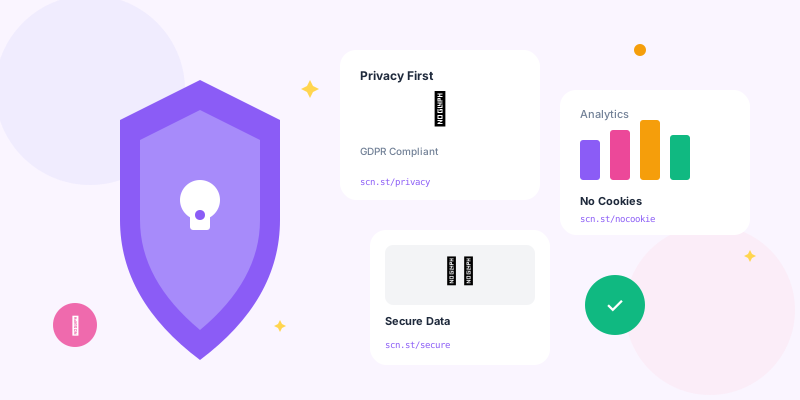
The days of tracking everything about everyone are over. Privacy regulations like GDPR, CCPA, and dozens of others have fundamentally changed how we can collect and use data. But you can still get actionable insights while respecting user privacy.
Understanding the Privacy Landscape
GDPR (General Data Protection Regulation)
- Explicit Consent: Users must actively opt-in before tracking (pre-checked boxes don't count)
- Clear Purpose: Explain exactly what data you collect and why
- Right to Access: Users can request all data you have about them
- Right to Deletion: Users can demand you delete their data
- Data Minimization: Only collect what you actually need
CCPA (California Consumer Privacy Act)
California residents have specific rights:
- Right to Know: What personal data you're collecting
- Right to Delete: Request deletion of their data
- Right to Opt-Out: Stop sale of personal information
- No Discrimination: Can't charge different prices to users who opt out
Other Global Privacy Laws
- LGPD (Brazil): Similar to GDPR for Brazilian users
- POPIA (South Africa): Consent-based data processing
- PIPEDA (Canada): Privacy protections for Canadian citizens
- Privacy Act (Australia): Strict data handling requirements
What Counts as Personal Data?
- IP Addresses: Can identify individual users (personal data under GDPR)
- Cookie IDs: Online identifiers that track individuals
- Device Fingerprints: Unique device characteristics
- Location Data: City, region, country (even aggregated can be personal)
- Referrer URLs: May contain sensitive info in query strings
Anonymous vs Pseudonymous Data
Important distinction:
- Anonymous: Truly impossible to identify individuals (aggregate stats only)
- Pseudonymous: Masked but potentially re-identifiable (still covered by GDPR)
Privacy-First Analytics Architecture
Server-Side Tracking
Moving tracking from client-side to server-side improves privacy:
- No Third-Party Cookies: Bypass browser cookie restrictions
- Data Control: You control exactly what gets stored and shared
- IP Anonymization: Strip IP addresses before logging
- No Ad Blocker Issues: Server-side requests aren't blocked
- 90%+ more accurate than client-side (no ad blocker interference)
- Complete control over data processing and storage
- Can anonymize before any personal data touches your database
- Easier to implement consent controls
Cookieless Tracking Methods
Track meaningful metrics without cookies:
- Session-Based: Track sessions without persistent identifiers
- Aggregate Metrics: Focus on overall trends, not individual users
- Referrer Analysis: Understand traffic sources without personal data
- URL Parameters: Campaign tracking via UTM without cookies
What You Can Track Without Consent
- Aggregate Click Counts: Total clicks without user identification
- Traffic Sources: Which platforms/sites drive traffic (without individual tracking)
- Device Types: Mobile vs desktop in aggregate
- Geographic Regions: Country/state level (not city or zip code)
- Time-Based Patterns: Peak traffic hours and days
These metrics are considered "strictly necessary" for legitimate business purposes and don't require explicit consent under most privacy laws.
Implementing Consent Management
Cookie Consent Banners Done Right
- No Pre-Checked Boxes: Users must actively opt in
- Clear Language: No legal jargon, plain English explanations
- Granular Controls: Let users choose what to allow (Analytics? Marketing? Both?)
- Easy to Decline: "Reject All" must be as prominent as "Accept All"
- Persistent Choice: Remember their decision across sessions
Consent Management Platforms (CMPs)
Popular solutions that handle consent properly:
- OneTrust: Enterprise-grade, handles complex requirements
- Cookiebot: User-friendly, good for SMBs
- Osano: Developer-friendly implementation
- Termly: Affordable option for small businesses
Data Retention Policies
- Raw Link Clicks: 90-180 days maximum (delete older data)
- Aggregate Statistics: Indefinitely (no personal data)
- IP Addresses: 7-30 days or anonymize immediately
- Cookie IDs: Match to user's consent duration (typically 6-12 months)
- User Accounts: Until user requests deletion or account inactivity (2+ years)
Automated Data Deletion
Implement automatic cleanup processes:
- Daily jobs that anonymize IP addresses older than 7 days
- Weekly purges of data past retention period
- Quarterly audits of data storage practices
- Instant deletion upon user request (must be under 30 days)
Privacy-Focused Alternatives to Google Analytics
- Plausible: Cookieless, lightweight, GDPR-compliant by default
- Fathom: Simple, privacy-focused, no cookies required
- Matomo: Self-hosted option, complete data control
- Simple Analytics: No cookies, no fingerprinting, fully compliant
Why Privacy-First Platforms Work Better
- No Consent Banners Needed: Don't collect personal data
- Not Blocked: Ad blockers don't target privacy-friendly analytics
- Better Performance: Lighter scripts load faster
- Cleaner Data: Aggregate metrics are often more actionable anyway
Link Shortener Privacy Features
- IP Anonymization: Strip last octet before storing (192.168.1.x instead of full IP)
- No Cookie Tracking: Use session-based analytics instead
- Geographic Aggregation: Country/state level only, not precise location
- Automatic Deletion: Configurable data retention windows
- Privacy Policy Links: Clear disclosure of tracking practices
Handling Data Subject Requests
Right to Access
Users can request all data you have about them:
- Must respond within 30 days (GDPR) or 45 days (CCPA)
- Provide data in machine-readable format (JSON, CSV)
- Include all processing activities, not just storage
- Verify identity before releasing sensitive data
Right to Deletion
Users can demand data deletion:
- Delete all personal data within 30 days
- Notify any third parties who received the data
- Confirm deletion to the user
- Keep minimal records of deletion request (for compliance proof)
Building Trust Through Transparency
- Clear Privacy Policy: Written in plain English, not legalese
- Data Usage Explanations: Tell users exactly what you track and why
- Easy Opt-Out: Make it simple to disable tracking
- Regular Updates: Notify users of policy changes
- Data Dashboard: Let users see what data you've collected about them
Privacy Compliance Checklist
- ✅ Implement proper consent management (no tracking before consent)
- ✅ Anonymize IP addresses immediately or within 7 days
- ✅ Set up automated data retention policies (90-180 days max)
- ✅ Create data processing agreements with third-party services
- ✅ Write clear, accessible privacy policy
- ✅ Implement data subject request workflows (access, deletion)
- ✅ Document all data processing activities
- ✅ Train team on privacy requirements
- ✅ Conduct regular privacy audits
- ✅ Appoint Data Protection Officer (if required)
The Business Case for Privacy
Privacy isn't just about compliance—it's competitive advantage:
- Build Trust: 79% of consumers prefer privacy-respecting brands
- Avoid Fines: GDPR penalties average €300K per violation
- Better Data Quality: Users who opt in provide more accurate info
- Competitive Edge: Privacy becomes a differentiator
- Future-Proof: Regulations will only get stricter
Conclusion
Privacy regulations aren't going away—they're expanding. Businesses that embrace privacy-first analytics now will avoid fines, build trust, and gain competitive advantage over those who treat privacy as an afterthought.
You don't need invasive tracking to make smart decisions. Aggregate data, consent-based tracking, and transparent practices give you the insights you need while respecting user privacy. Start implementing privacy-first practices today.